
 Image 1 of 3
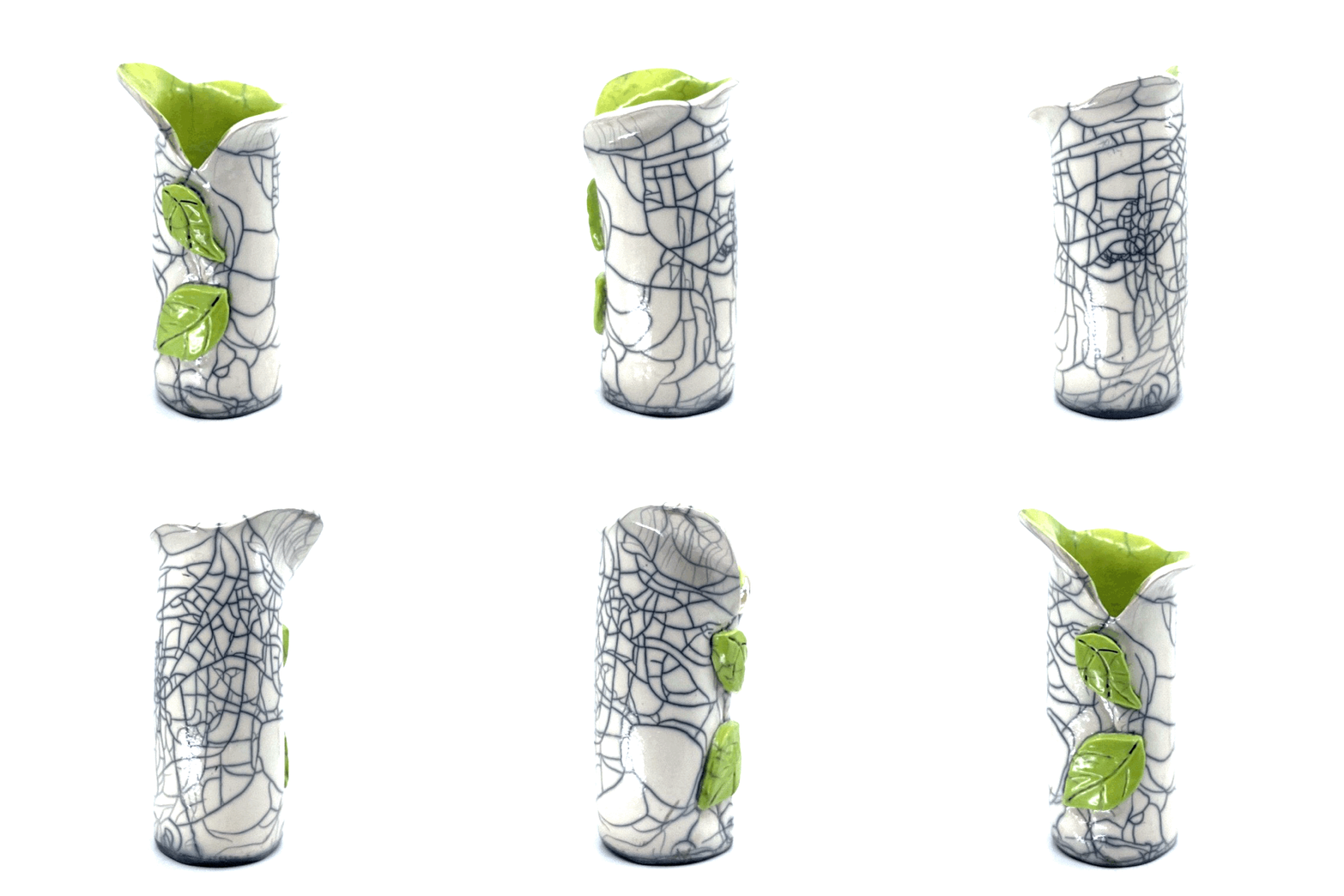 Image 2 of 3
 Image 3 of 3
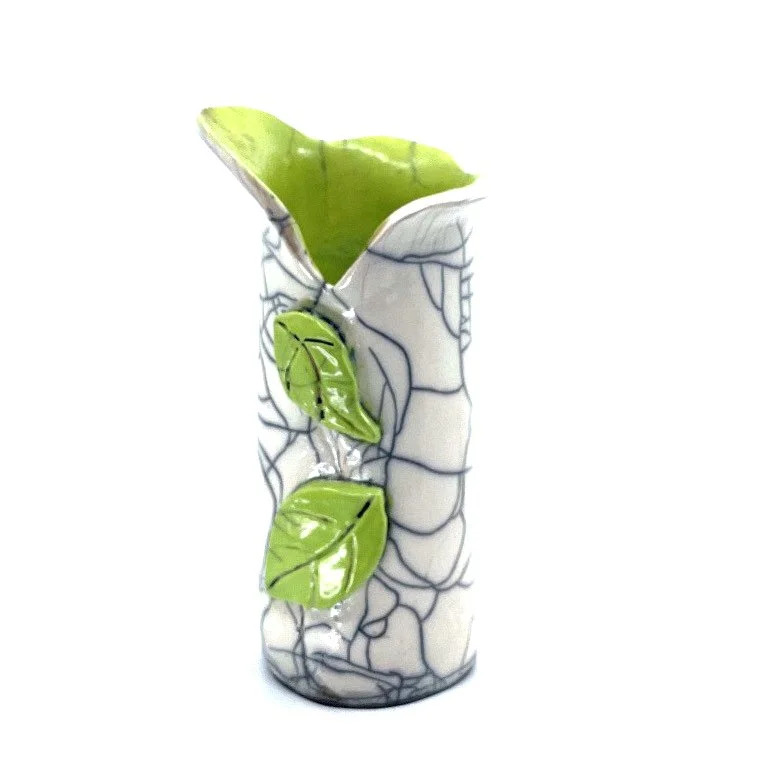
This eye-catching vase combines traditional glaze (the bright green) with a white crackle raku glaze. The crackling occurs when the piece is pulled from a hot kiln, sprayed with cold water, then put in a bucket with newspaper which instantly ignites from the heat of the piece. It’s covered and left to burn for 12 minutes. The glaze shrinks faster than the clay as the piece cools, creating the cracks, and the fire-generated smoke inside the bucket turns the cracks black. Two bright green aspen leaves decorate the front, creating a wonderful contrast against the black/white.
Height: 7”
Diameter: 2-3/4”
Colorado is known for its aspen trees. Aspens cover about 20% of Colorado’s forested land and are the state’s only widespread, native, deciduous tree. A stand of aspen is genetically identical—one living organism—regenerating through sprouts produced by the roots. Unfortunately, these trees are declining rapidly across the continent due to warming temperatures, drought, pest infestations, and browsing by moose, elk and deer. Research is underway to help save these beloved trees.
This eye-catching vase combines traditional glaze (the bright green) with a white crackle raku glaze. The crackling occurs when the piece is pulled from a hot kiln, sprayed with cold water, then put in a bucket with newspaper which instantly ignites from the heat of the piece. It’s covered and left to burn for 12 minutes. The glaze shrinks faster than the clay as the piece cools, creating the cracks, and the fire-generated smoke inside the bucket turns the cracks black. Two bright green aspen leaves decorate the front, creating a wonderful contrast against the black/white.
Height: 7”
Diameter: 2-3/4”
Colorado is known for its aspen trees. Aspens cover about 20% of Colorado’s forested land and are the state’s only widespread, native, deciduous tree. A stand of aspen is genetically identical—one living organism—regenerating through sprouts produced by the roots. Unfortunately, these trees are declining rapidly across the continent due to warming temperatures, drought, pest infestations, and browsing by moose, elk and deer. Research is underway to help save these beloved trees.