
 Image 1 of 3
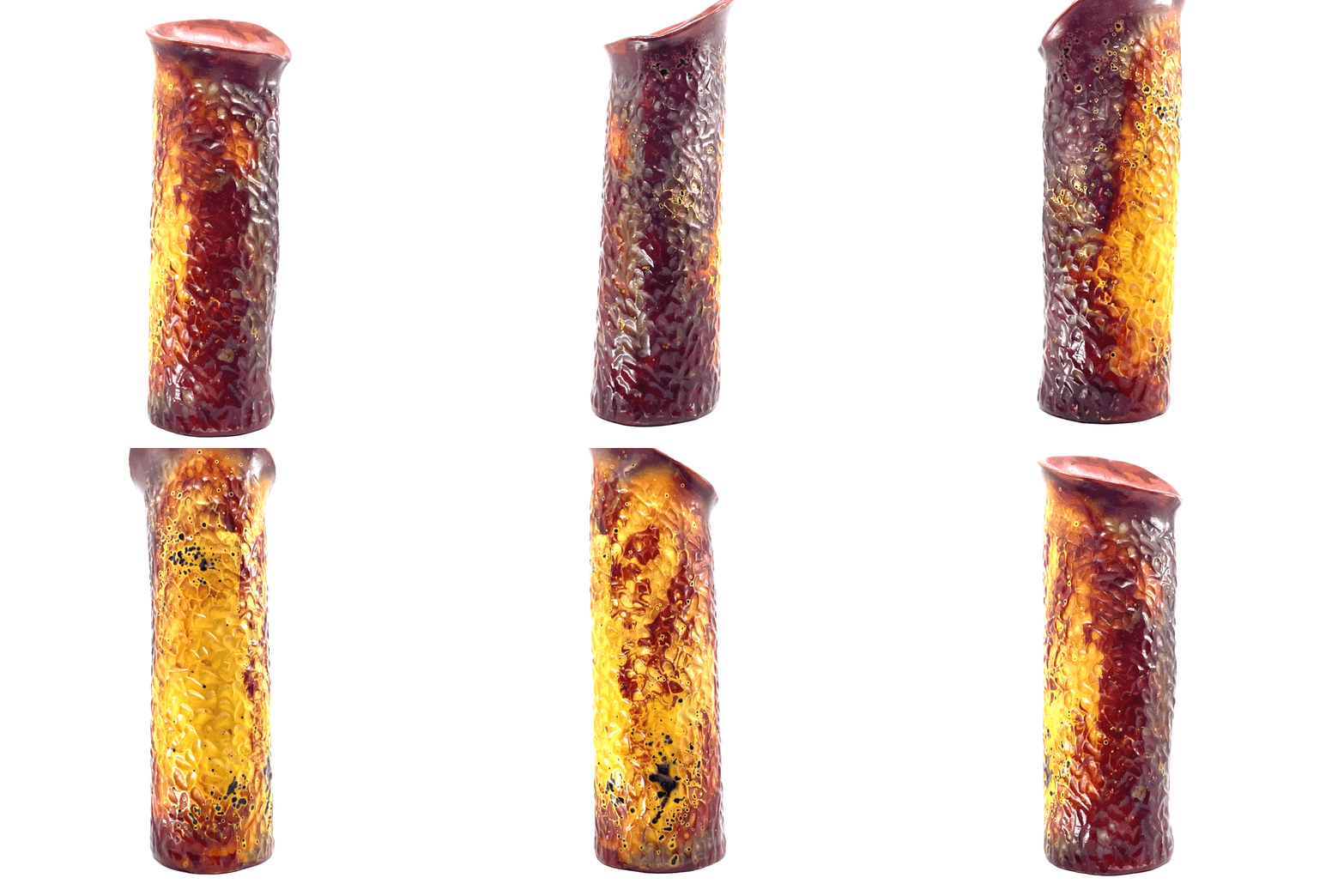 Image 2 of 3
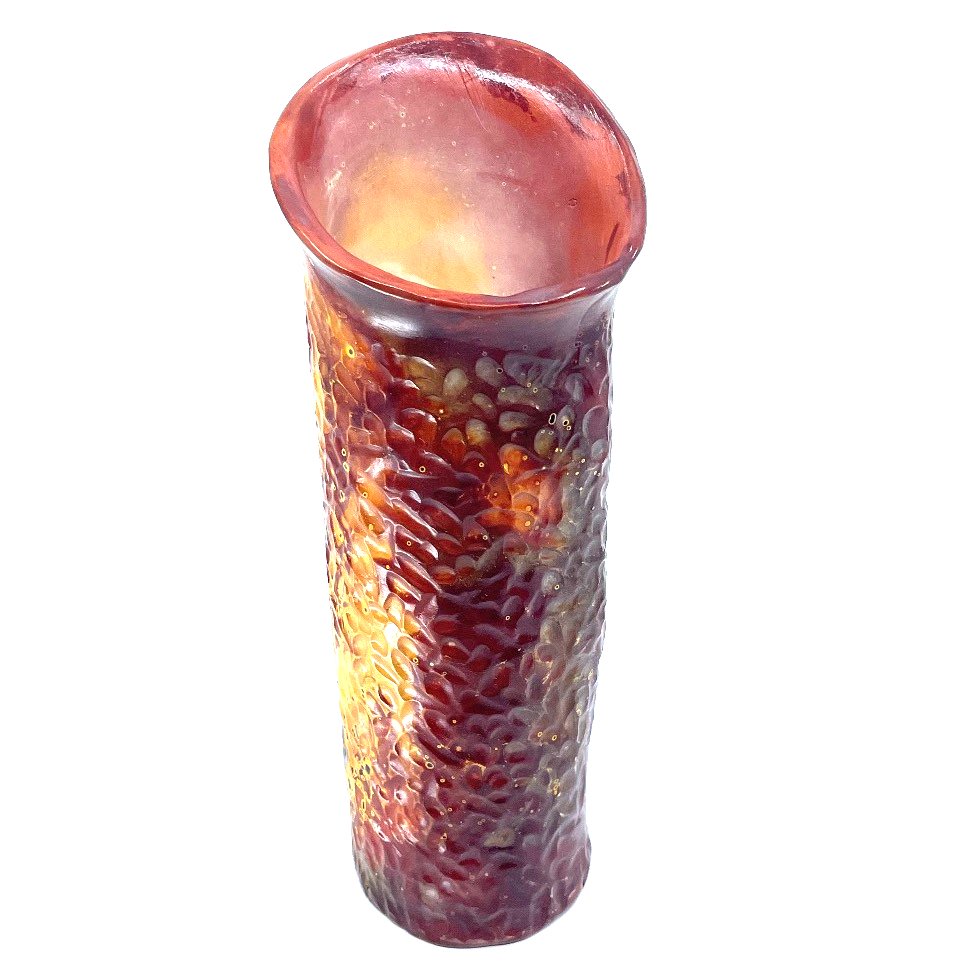 Image 3 of 3
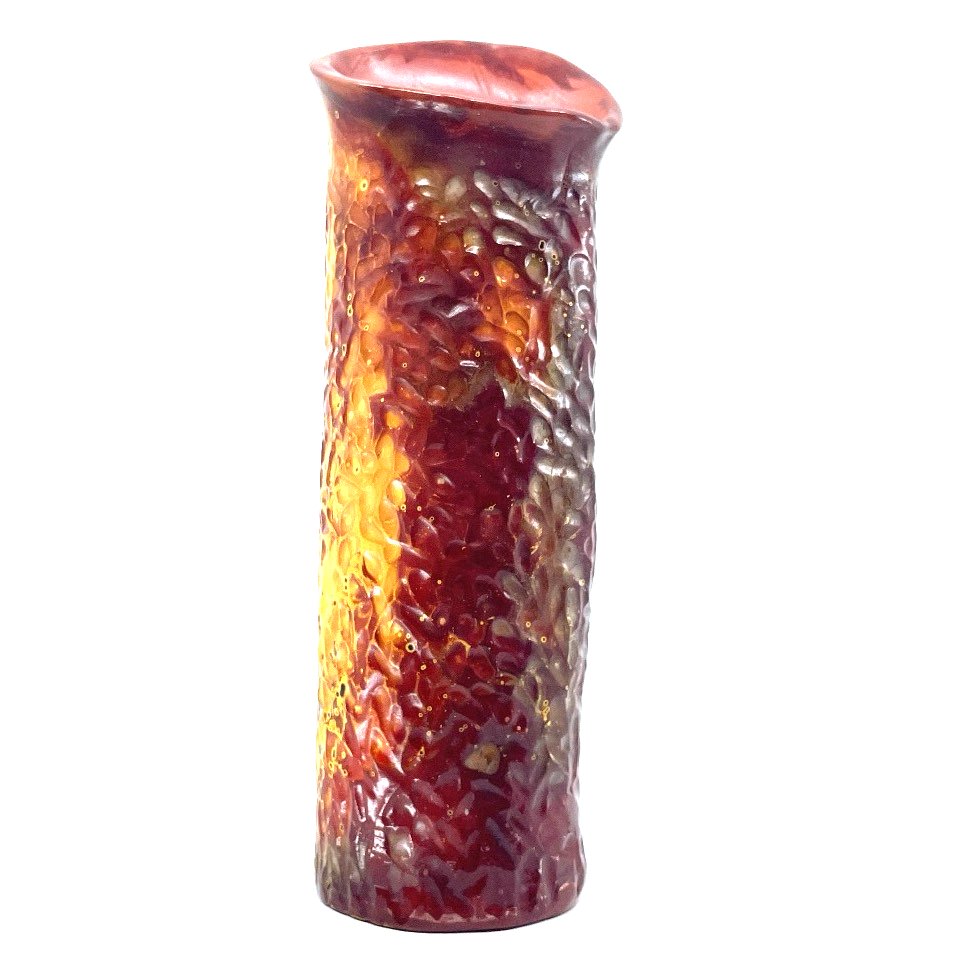
After hand building, this tall vase with a flared rim was carved to give it a wonderful light-catching texture. It was colored exclusively by fire; there is no glaze on the piece. Before firing, it was brushed with an iron solution and wrapped in aluminum foil, along with organic materials such as horsehair, onion skins and sugar. During the firing, the flames interact with the materials to create the colors; hotter areas turn a darker red while cooler areas become yellow.
Height: 9-3/4”
Diameter: 3”
Coconino National Forest in northern Arizona is one of the places where biologists study the effects of fire on wildlife. Fire is a disturbance of the landscape that changes habitat, sometimes in a good way and sometimes not. Some species benefit from wildfire—raptors hunt rodents running from the flames, woodpeckers nest in hollow trees and elk eat the newly exposed grass and vegetation. Other animals struggle to find food and habitat when trees succumb to fire. Resource managers work with firefighters to minimize the deleterious impact of both fire and its suppression on local ecosystems.