
 Image 1 of 3
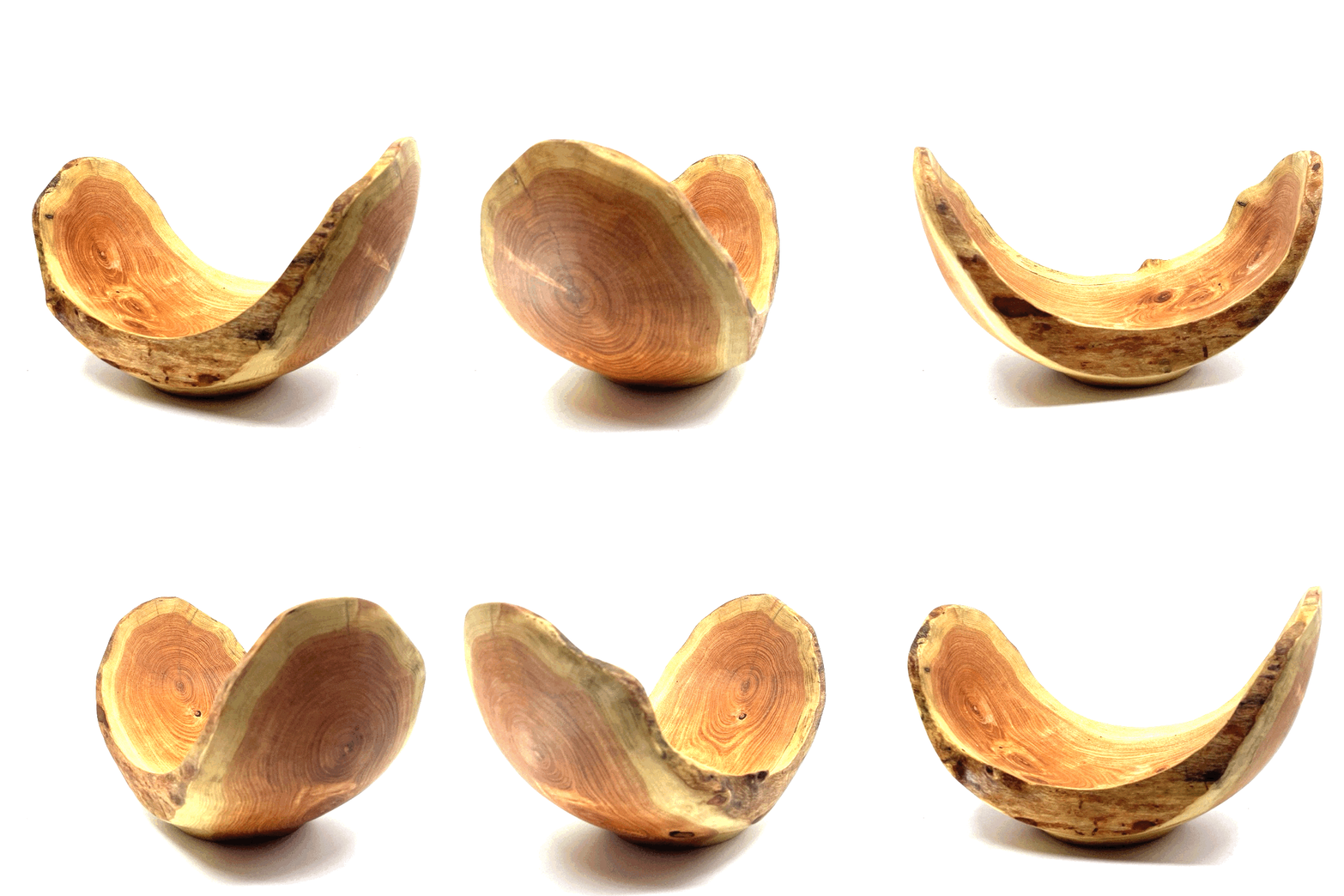 Image 2 of 3
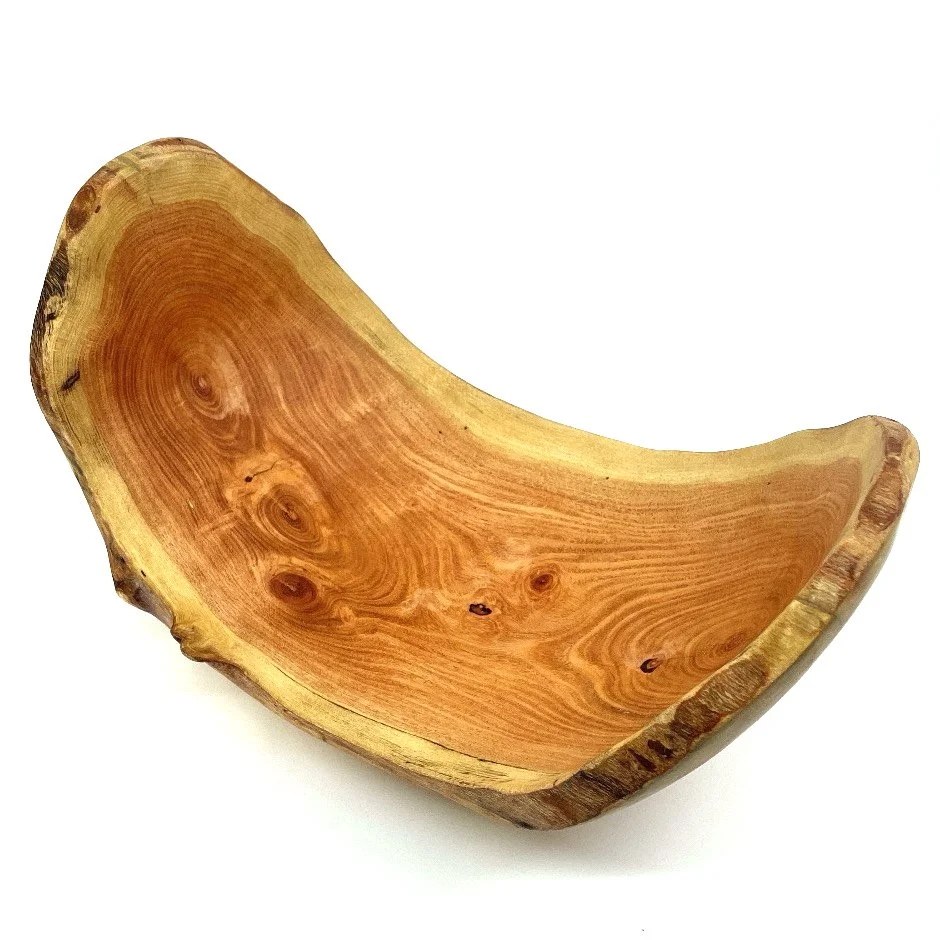 Image 3 of 3
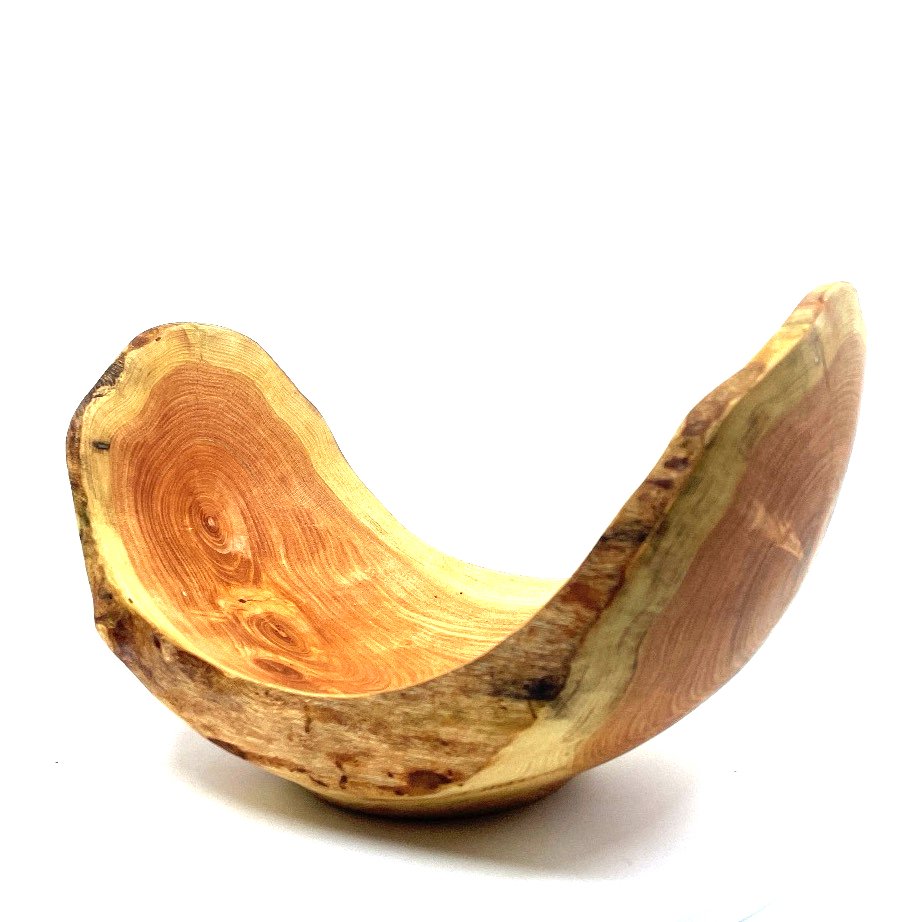
This eye-catching, banana-shaped bowl is made from honey locust. There’s a beautiful contrast between the orangish heartwood and the pale sapwood and a bit of bark remains on the rim. It would be a fabulous accent piece and could also be used to hold fruit on a countertop.
Length: 11-1/4”
Width: 6-1/4”
Height: 6-1/4”
Ashley Garver performed a historic study of the honey locust tree’s domestication for use in urban environments. Wild honey locust trees produce long thorns, making them undesirable for any urban areas. The trees were originally used on farms for their excellent shade-producing qualities. In the early 1900s, domestication experiments began through grafting trials, and ultimately the thornless variety of honey locust was created. This tree became a viable replacement for elm trees in the urban environment after Dutch Elm Disease wreaked its havoc.
This eye-catching, banana-shaped bowl is made from honey locust. There’s a beautiful contrast between the orangish heartwood and the pale sapwood and a bit of bark remains on the rim. It would be a fabulous accent piece and could also be used to hold fruit on a countertop.
Length: 11-1/4”
Width: 6-1/4”
Height: 6-1/4”
Ashley Garver performed a historic study of the honey locust tree’s domestication for use in urban environments. Wild honey locust trees produce long thorns, making them undesirable for any urban areas. The trees were originally used on farms for their excellent shade-producing qualities. In the early 1900s, domestication experiments began through grafting trials, and ultimately the thornless variety of honey locust was created. This tree became a viable replacement for elm trees in the urban environment after Dutch Elm Disease wreaked its havoc.